Surviving Cancer with a Side of Sass

"Laughing Through the Journey, One Sass at a Time"

  • Strong on the outside, crumbling inside (and learning that’s okay)

    While attending a cancer support group event, I couldn’t help but notice the significant female-to-male ratio in the room. For a moment, I genuinely wondered: Are women more prone to get diagnosed with cancer than men? Turns out, statistically, men are at a slightly higher lifetime risk – one in two men versus one in three women. But here’s the twist: more women are getting diagnosed under the age of 50, especially with breast cancer, and that number is climbing steadily. Thanks, modern lifestyle.

    According to the American Cancer Society, 82% of new cancer diagnoses under 50 are in women. Some say it’s biology, some say it’s hormones, and some say it’s the stress of pretending to have it all together 24/7. I also think it’s because women are more likely to seek help, talk about symptoms, or say “this doesn’t feel right,” while society still teaches men that expressing emotion somehow threatens their masculinity. I mean…we’re all human. It’s okay to not be okay.

    This realization made me reflect on how I handled my own emotional health after the Big C walked into my life uninvited.

    The brave face that almost broke me

    Something I wish I had done differently from day one? Deal with the emotional impact of the diagnosis rather than stuffing it deep down next to my old childhood trauma and unopened bills. At the time, I was under the illusion that addressing those emotions would somehow make me “weak.” So instead, I went full-on stoic. Brave face on, mascara (when I still had lashes) intact, and chin up.

    Everyone applauded my strength and called me brave and sure, that’s flattering but behind the scenes, I was barely holding it together. I was unraveling in slow motion while smiling for the camera. My loved ones, to their credit, noticed I was bottling things up and gently reached out. I’m so grateful they did. If they hadn’t, it would have been even harder to claw my way out of that dark space.

    By the time chemo ended, it all caught up to me like a hormonal avalanche. I was done surviving mode but now what? The irreversible decisions, the medical trauma, the physical toll… it all started to sink in.

    Healing isn’t just in the blood work

    The moment those emotions hit, I had to figure out how to let them out safely preferably without traumatizing strangers in the grocery store. So I started journaling. Sometimes I wrote a few pages, sometimes it was a single heavy sentence like, “Why me?” or “Please let this end soon.” Other times, I recorded video logs like emotional TED Talks, except I was the only audience and didn’t bother with lighting.

    Looking back at those now? Honestly, I’m proud. I advocated for my well-being when it felt like everything was spiraling. And I owe a lot of that to my care team they listened, they explained, they acted fast when complications arose. They didn’t just treat me; they saw me.

    Please, put yourself first

    So if you’re reading this, please put yourself first. It’s not selfish. It’s survival. Your health and mental peace are your greatest assets. Everything else? Comes second. Or third.

    And if you have someone in your life who’s going through cancer ask them how they’re really doing. Not just their white-blood-cell count. Sometimes what we need most isn’t a solution just a safe space to fall apart.

    And if you’re a patient like me, don’t wait until you’re on the other side of treatment to feel things. You don’t have to “earn” the right to break down. Talk to someone. Write it down. Cry into your pillow. Confess your secrets to your pet. Whatever works. Just don’t bottle it up like I did because one day that bottle will explode and it’ll probably be in the middle of a grocery aisle.

    Remember: healing isn’t linear, and it isn’t just physical.

    “Just because someone carries it well doesn’t mean it isn’t heavy.”

    You’re allowed to feel it all and still keep going.
  • When the worst news is yours to break (and you still find a way to keep going)

    I don’t know what was harder, hearing “you’ve got cancer” or calling my parents, who live thousands of miles away, to tell them.

    They already knew about the “I found something on my breast” situation. They were waiting for the follow-up call, hoping it would be one of those false alarms life sometimes throws at you.

    But this wasn’t one of those.

    I walked into that biopsy result appointment with my brother. The nurse practitioner looked at me and said, “I’m sorry… it’s cancer” and just like that, the air left the room.

    I mean, I knew it deep down. But it hits different when someone confirms it using the C-word with the kind of seriousness you only see in documentaries.

    I cried. A lot. The nurse practitioner hugged me. I held onto her like she was a floating door in the Titanic. She didn’t rush me. (Bless her soul)

    My brother sat beside me and cried too which was rare. He’s the type who processes feelings like it’s a software update he’ll install later.

    Then came the part I was dreading more than chemo, telling my parents.

    I called Dada. I couldn’t say anything at first. Just cried and he knew that the verdict is out but he didn’t ask me to speak. He waited. Then I told him, “It’s cancer.”

    He tried to be strong. But then I heard him crying.

    I’ve only seen my father cry twice. Once when his mom passed away. The second time, this call.

    He said, “We’ll figure it out tomorrow. Just rest tonight.”

    The next morning, I called Mama. She’s strong the kind of woman who reads every food label, takes her vitamins, and can recite home remedies like holy scripture. But she didn’t say a word after I told her. I just heard her cry quietly.

    I didn’t talk to her without tearing up for weeks after.

    For a moment, I thought I should fly back home. But my family doctor gently nudged me to stay in Canada. “You’ll get the best care here,” he said.

    And so, I stayed solo.

    I was living with my brother and his family. I had a roof and food and that’s more than many have but emotionally? I felt like a guest overstaying her welcome, dragging in chemo appointments and emotional baggage.

    I didn’t want to burden anyone, especially people who didn’t sign up to be my caregivers. So I handled it. Appointments, bloodwork, scans, EI applications, Trillium drug benefits… even my rides to treatment with the Cancer Society’s Wheels of Hope program. (and sometimes, Uber because even hope runs out of drivers.)

    I went to all 16 chemo infusions alone.

    For surgery, my brother and his wife dropped me off and picked me up, but the overnight hospital stay? That was me, the IV machine, and my dramatic internal monologue.

    Radiation? Me again.

    Immunotherapy? Same solo rider.

    And the weird part? I didn’t even ask for help. I’ve had this lifelong issue, it’s called “I-can-do-it-myself” Even when I was literally dying, I didn’t want to bother anyone.

    But I wasn’t really alone. I had God, and I had prayers sent from halfway across the world and sometimes, that was enough.

    I had family and friends who were willing to help me whenever they can but I didn’t reach out except for one time when I had a late night scan appointment where my friend and her fiancé drove me and I swear it felt like a limo ride to the Oscars.

    If you have a partner in care or a support system please, please don’t take them for granted. They carry more than bags and meds. They carry the emotional overflow we can’t always manage ourselves.

    And if you don’t have one?

    Know this: your strength might surprise you. Some days, surviving is the only item on the to-do list, and that’s more than enough.

    Someone in my support group once said that cancer is like being separated from the rest of the world by a glass wall. They see you. They’re with you. But they don’t always get it.

    You might look good on the outside. But inside? It’s a battleground of meds, fatigue, and feelings you didn’t know existed.

    So speak up when you can. Ask for help when you need to. And if they stay? That’s your people. If they don’t? That’s your clarity.

    Remember, you are not just surviving this. You are showing up for your life, bruised but breathing, cracked but not broken.

    “The strongest people are not those who show strength in front of us but those who win battles we know nothing about.”
    Unknown

  • My Chemo Adventure: Meds, Side Effects & Life Lessons (I didn’t ask for)

    Let’s dig into chemo, the notorious villain in every cancer journey. Not everyone with cancer has to go through it, but I wasn’t that lucky. That said, I’m grateful it worked. It shrank my tumor and gave me the three words every cancer patient longs to hear: No Evidence of Disease. So yes, while chemo knocked me down, it didn’t knock me out.

    When I started, I was handed a folder not the kind that comes with job offers or vacation plans, but one with unpronounceable medication names, alarming side effects, and consent forms that made me question all my life choices. Reading it felt like prepping for a thesis defense… except the thesis was “How Not to Die.”

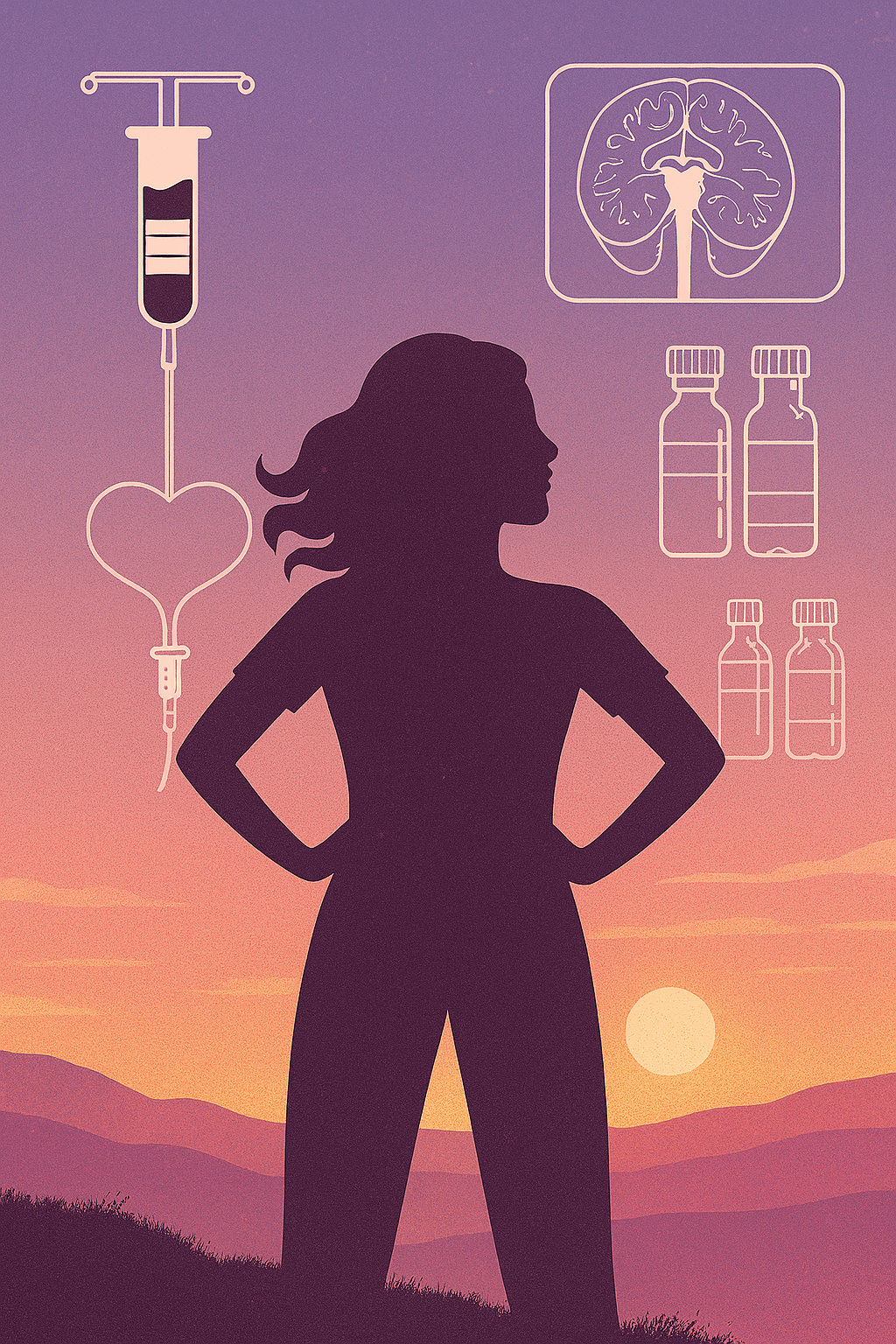
    Chemo was just the beginning, I got a side of meds that could rival a pharmacy shelf. There were anti-nausea pills, steroids, immune boosters, and enough IV cocktails to qualify as a medical mojito. My go-to lineup? Olanzapine (yes, the antipsychotic but it helps with nausea), Ondansetron, Akynzeo, Dexamethasone, and Benadryl. I loved Benadryl days. I’d pass out mid-conversation and wake up wondering what decade it was.

    Despite all the prep, I still had my share of plot twists. My blood sugar spiked thanks to the steroids, I developed neutropenia, and my chemo dose had to be adjusted. Lapelga injections helped boost my white blood cells but let’s just say the back and joint pain that came with it made me feel like I was auditioning for a zombie role. Multiple ER visits later, I could probably give the triage nurse a break and check myself in.

    Twice, I needed blood transfusions, and once, an iron infusion because my iron levels tanked. That day, I told the nurse my pain level was “definitely more than 10,” which for me, meant I was silently contemplating my life while curled up on the ER chair like a sad burrito. But somehow, I always left feeling better a testament to meds, nurses, and perhaps a sprinkle of divine intervention.

    Now, let’s talk about what chemo actually felt like. Day one, I was okay-ish. Day two, the chemo kicked in like an uninvited guest tired, achy, foggy. I moved as much as I could (stairs became my Everest), did some deep breathing, tried to learn French (failed), crocheted (kind of), journaled (a lot), and cried (even more). The tears would come out of nowhere mid-Netflix, mid-toast, mid-toothbrushing. I’d forget why I started crying, but hey, at least I was hydrated?

    And then there was the hair saga. I didn’t shave my head right away like many do. I cut it short and waited and waited. Until one day, it started falling out in clumps in the shower, on the pillow, on my shirt and in my food. Four months in, I finally shaved it. Not because someone told me to but because I was ready. (Pro tip: Don’t shave it until you are.)

    What I didn’t expect? To rock a bald head. I found birthmarks I didn’t even know I had little constellations that had been hiding beneath the hair I always took pride in. It was bizarre, surreal, and oddly beautiful.

    But losing all body hair? That’s a whole other conversation. Eyelashes? Gone. It turns out, they’re quite important. Without them, I needed eye drops just to open my eyes in the morning. Eyebrows? I never had a lot to begin with, so that was fine. But nose hair? Who knew they were gatekeepers of respiratory sanity? With them gone, every breath felt like an overexposed photoshoot no filter and no fluff.

    Honestly, it felt like I got a full-body wax that lasted for six months. (Silver lining: No razors, no salon bills. Cancer’s weird gift economy.)

    By the time I began to feel remotely like myself again, it was time for the next round. And so the cycle repeated: infusion, side effects, emotional chaos, brief recovery, repeat.

    But here’s what I learned in between naps, needles, and nausea:

    • Health is your real wealth. Once that’s compromised, nothing else matters ; not titles, not money, not your perfectly curated social media aesthetic.
    • People show their true colors when things get dark. Some will hold your hand. Others will ghost. Let them go.
    • Stop clinging to your life plan. Spoiler alert: Life does not care. It’ll flip your table and then ask if you’d like dessert.

    You can’t control the storm, but you can learn to dance in the chemo fog. If you’re lucky, you’ll even find a reason to laugh even if it’s through gritted teeth and hairless brows.

    So no, I didn’t ask for this journey. But here I am not just surviving, but spilling the tea, one med at a time.

    Disclaimer : This is my experience and yours may differ, and that’s okay

  • My cancer diagnosis: Welcome to the Club (but seriously, I didn’t sign up)

    According to the World Health Organization, roughly 20% of the global population will be diagnosed with cancer at some point in their lives. So, having cancer means you get a lifetime membership to an elite club that you never actually wanted to join. Feels special and shitty at the same time, right?

    Like most cancer patients, I was in denial when I was diagnosed. I was eating healthy, maintaining a healthy weight, and following an active routine. I thought, “I’m doing everything right.” Then I hear those dreaded words: “You have cancer.”

    Before my diagnosis, I was managing hypothyroidism, but other than that, I was mostly fighting off the occasional cold or seasonal flu. I was convinced I was healthy. But apparently, God had other plans. Let’s see how she deals with this!(sigh)

    I was furious when I got the news, and then I cried about how I would handle this while settling into a foreign country with minimal support. The loneliness hit hard, especially when you’re trying to adjust to a new place, new people, and now, a new illness.

    After discussing all the options, I decided to go ahead with the common treatment plan. I could’ve gone for a trial, but I wanted a fast ticket to “cancer-free” land, not the scenic route. My oncologist handed me a folder filled with chemotherapy meds and side effects. It felt like I was back in school reading a research paper for a literature review not exactly what I expected after my diagnosis.

    I was informed about the general side effects: nausea, loss of appetite, hair loss, bloating, hot flashes (because I was on medically induced menopause), mood swings, depression, and the potential for a second cancer. They made it sound like a bonus round, but the odds of that were statistically insignificant. I still wasn’t thrilled.

    Signing the consent form was a gut-punch. I’ve signed health-related consent forms for my parents before, but this time it was for me, and it felt different. I was mentally drained just from that appointment. I wasn’t just signing for treatment; I was signing up to stay alive. But through it all, I shifted from fear to faith. I turned to my creator and became hopeful that I’d survive this challenge with God’s blessings, the prayers of my loved ones, and, of course, some seriously strong meds to kill those cancer cells.

    My treatment plan was 8 rounds of chemo: 4 weekly doses (for 12 weeks), then a 3-week break, and then 4 more rounds. Since my tumor was huge, I had to do chemo first, followed by surgery and radiation.

    The First Chemo Appointment

    My first chemo appointment was scheduled for 6 hours. Why so long? Apparently, I have no history of medical allergies, and they needed to administer the IV slowly. So, after getting some steroids and Benadryl through the IV (because who doesn’t love a good nap?), I spent most of the time dozing off. I was alone, but a volunteer sat with me, making sure I didn’t feel totally alone in my chemo bubble.

    My parents, living thousands of miles away, called to check on me, and their love and prayers felt close even though they weren’t physically there. My friends did check up on me too, felt good to know that I was in their thoughts.

    What they don’t tell you about chemo is that they load you up with premeds so you don’t feel the full impact right away. I swear, I was a walking biohazard. I threw up everything I ate that day and couldn’t even keep water down. So, lesson learned: Bland food is your friend during chemo. You will thank me later.

    Side Effects Galore

    Now, here’s where things get interesting. I experienced all the least likely side effects from chemo. And trust me, it’s worth a whole other post. My experience was different because I was also dealing with an autoimmune disease, so my level of pain was on a whole new level. I’m not disregarding others’ experiences, but let’s be real don’t compare yours to anyone else’s. Everyone’s body handles it differently.

    Before I started chemo, I watched tons of videos and read articles, which gave me an overall idea of what to expect. But trust me when I say, it’s not as bad as the movies make it out to be (thank God). If you’re worried about the side effects, don’t sweat it. Your oncologist has your back with a full range of meds to keep you alive and kicking while you fight cancer.

  • My unexpected visitor: cancer, humor, and finding my own timing

    I’ve always been an enthusiastic person with a vision to live a fulfilling life. From a young age, I had a timeline I followed, and for the most part, I stuck to it. My loved ones often told me I was too harsh on myself and should cut myself some slack. But I was always worried I wouldn’t achieve my goals in time to fulfill my life’s mission.

    In the process, I migrated to a new country, seeking a better life and to support my family. My parents never expected anything from me (well, they never had to. I’m still single, so my family is just my mom and dad). As I was figuring out how to navigate life in a foreign country, among unfamiliar faces and surroundings, an unexpected visitor knocked on my door. And by “visitor,” I mean cancer.

    Just a week before my 32nd birthday, I was diagnosed with stage 3, grade 3, locally advanced invasive ductal carcinoma. All the cancer receptors (ER, PR, HER2) were negative. My primary tumor was in my breast, and at the time of diagnosis, it had spread to my lymph nodes. To make matters worse, I was diagnosed with one of the most aggressive forms of cancer, and I had to begin treatments immediately.

    Like most people, I noticed something was wrong when I felt a lump in my breast while doing some chores. I told my family doctor that I wanted to get it tested. His immediate response was, “You’re too young to have cancer, but let’s get the tests done.” I’m thankful I insisted on getting the test done when I did. If I hadn’t, my journey might look very different from where I am today.

    Now, I’ve always hated hospitals. There was a time when I dreamed of becoming a doctor, but with my deep-seated aversion to hospitals, I knew it wasn’t going to be my path. Yet, with my diagnosis, I found myself at the hospital two to three times a week for blood work, scans, consultations, and more.

    I was also told I might carry the BRCA 1/2 gene mutation, which could explain the aggressiveness of my cancer. Thankfully, the test came back negative. But the report revealed I had various unknown mutations that I’ll need to check on later with a genetic counselor. Lucky me, right?

    Being single, I was told I might need to preserve my eggs if I ever wanted to have biological children. Not exactly the kind of decision a hopeful romantic like me was ready to make, especially since I’ve lived most of my life single. But cancer doesn’t give you a choice. With a ticking timer in front of me, I had to make decisions I never imagined having to make.

    I was referred to a fertility clinic, where I had to do more tests. They said I could start the procedure, but my CT scan showed that my cancer had spread. So, it was time to choose: either preserve my eggs or focus on my life now, as I was told my cancer required immediate treatment. My oncologist left the decision up to me, but I wasn’t ready to let go of the possibility of having children someday. After considering alternatives, I opted for Zoladex (Goserelin Implant), which helps preserve reproductive organs during chemotherapy essentially putting me into medically induced menopause.

    My treatment plan included 16 infusions spread over 24 weeks. I had a PICC line (a catheter in my arm to administer the chemo). Imagine having a foreign object hanging from your arm, limiting your clothing options. I didn’t want my PICC line to be on full display, so I had to wear a cover to prevent it from getting tangled with my clothes and one when showering. And as someone with sensitive skin and a severe allergy to adhesives, you can imagine how “fun” that was.

    All jokes aside, there was a time when I thought I might not make it through. I was in a very dark place. But journaling, practicing mindfulness, and looking at the entire experience with a bit of humor helped me navigate it. I’ve always had a dark sense of humor, and cancer brought that side of me out even more. I hope that’s not too controversial to say, but that’s the truth. It helped me get through, and now, I want to share my journey with you all because if I can make you laugh instead of worrying about what happens next, I’m happy.

    Remember that strict timeline I had for myself? Well, I don’t follow it anymore. I trust the timing of my bloom and still live my life to the fullest even though cancer hasn’t completely left my life. It feels like having a stalker for life, but hey, I’m still here, and I’m still living.